
James B. Stewart: 2023 Distinguished Alumni Award Honoree
Award-winning author James B. Stewart '69 has been selected as the second recipient of the Distinguished Alumni Award. This award will be officially presented to James during the Night to Dream Big Gala, Friday, Nov. 3, 2023 at the Ambiance in Quincy.

As an author, James B. Stewart '69 has the unique ability of drawing attention to absurd or unjust situations that have previously gone unnoticed by most. While he has spent his life honing his journalistic abilities, giving voice to the underrepresented and fighting for justice and equality have long been part of who James is. One example dates back to when James was enrolled at Quincy High School. He was a strong student who naturally excelled in his studies. While his grades were mostly comprised of As & Bs, one semester James received a C in his P.E. class. That grade, though lower than his norm, was a telling indicator of James’ character and what his future held.
During James' time at QHS, P.E. was a mandatory class and students in the class were given t-shirts that were color-coded to their physical abilities.
“At the beginning of the year, you would do your physical fitness test, and then you were ranked and given a t-shirt that was color coded to your rank. So the top 25% of students wore blue T-shirts, the next 25% wore red and then green and finally, the lowest ranked 25% wore yellow shirts,” remembers James. “Everything in that class was based on your shirt color, almost like a class system. The blue shirts got to shower first, among other special privileges. The yellow shirts were the lowest class citizens and treated that way.”
While he was not a yellow shirt himself, this system did not sit well with James. Even in his youth, James was not one to witness such an unfairness quietly.
“I guess I was a bit of a rebel, I guess. I just did not like to see how these students were being treated. So I gathered some of my classmates from all of the different shirt colors and we protested.”
The students banded together to oppose the unjust T-shirt practice by bringing white T-shirts to wear to P.E. After a short while, the color-coding system was discontinued.
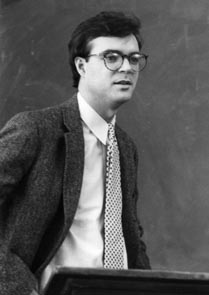
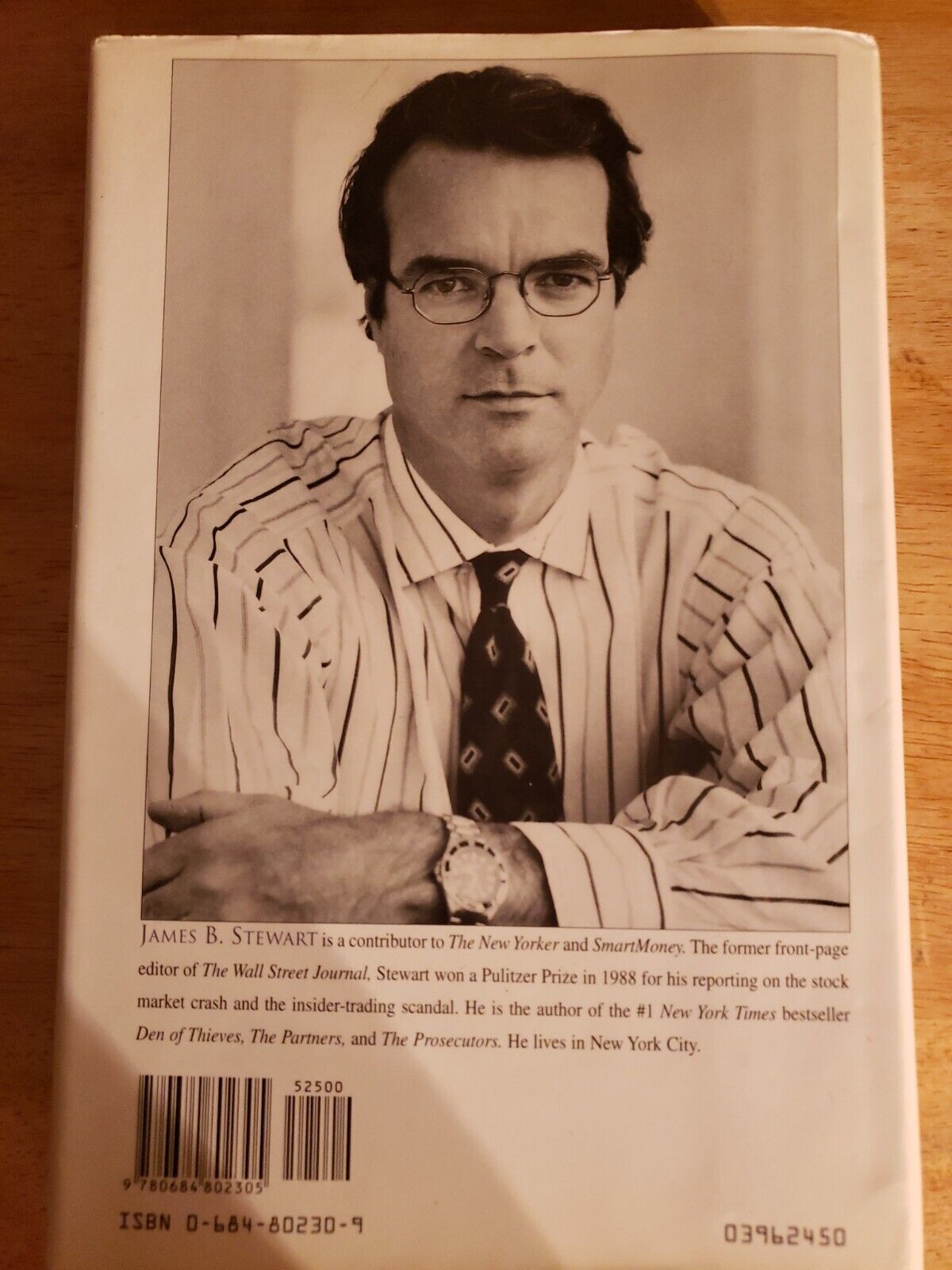



A Little Bit About James
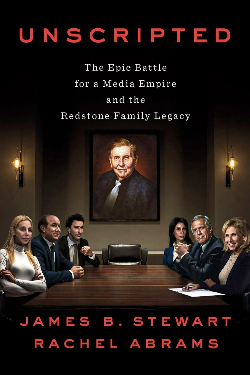
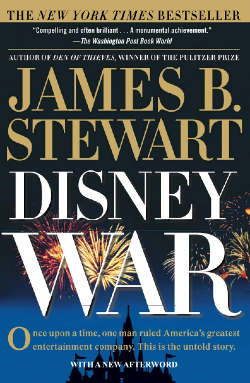
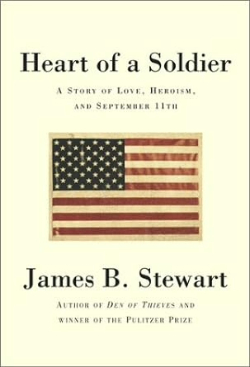
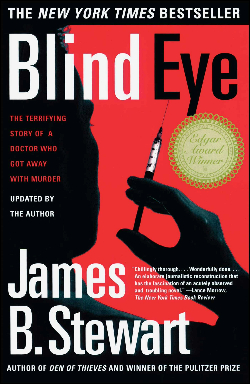
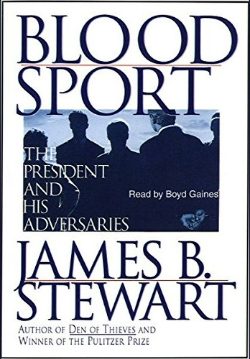
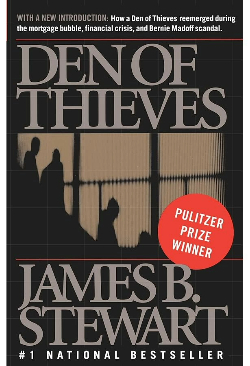
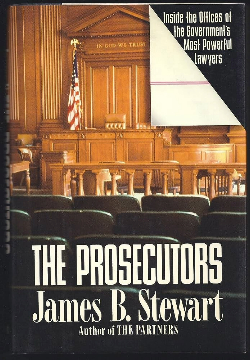
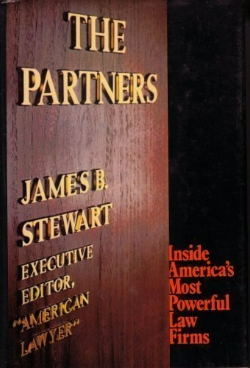
James B. Stewart is the author of 11 books, most recently the New York Times bestseller Unscripted: the Epic Battle for a Media Empire and the Redstone Family Legacy (with co-author Rachel Abrams). Other books include the #1 New York Times bestsellers Den of Thieves and Blood Sport; DisneyWar, winner of the Gerald Loeb award for best business book; Blind Eye, winner of the Edgar award given by the Mystery Writers of America; and Heart of a Soldier, a saga of Sept. 11 named by Time magazine as the best non-fiction book of 2002, which was adapted as an opera in 2011 by San Francisco Opera.
James won a Pulitzer Prize in 1988 for Wall Street Journal articles on the stock market crash in 1987 and insider trading. In addition to the Edgar for Blind Eye, he has won many other journalism awards, including multiple Gerald Loeb Awards; the ABA’s Silver Gavel award; and awards from SABEW, the Society of American Business Editors and Writers, including a lifetime achievement award.
James is a graduate of DePauw University, where he was editor of the college newspaper, and Harvard Law School. After graduating he was an associate with Cravath, Swaine & Moore in New York. His legal education and experience in corporate litigation have informed much of his subsequent journalism. In 1979 he became one of the first reporters for and helped launch The American Lawyer magazine.
In 1983 he joined the Wall Street Journal and in 1988 became the paper’s Page One editor. During his tenure the front page covered the Tiananmen Square showdown in Beijing; the fall of the Berlin Wall; the 1988 and 1992 Presidential elections and spotlighted the burgeoning AIDS epidemic and the accompany rise of gay activism.
In 1992 James began a long tenure as a staff writer for the New Yorker, and several of his books began as feature stories there. His New Yorker stories, including a detailed account of the financial crisis of 2008, were National Magazine Award finalists nine times (but never won.) He also helped launch SmartMoney magazine for Dow Jones and wrote a column that appeared in both SmartMoney and the Wall Street Journal.
James joined the New York Times as a business columnist in 2011. He continues to write columns and feature stories for the Times, which have won both Loeb and SABEW awards.
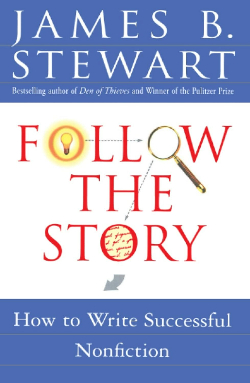
James combined his writing career with a commitment to education. He taught at Columbia School of Journalism beginning in 1992 and later became a tenured faculty member as the Bloomberg professor of Business Journalism. His book on writing, “Follow the Story,” grew out of his experiences in the classroom.
James was born and raised in Quincy. He is a recipient of the Order of Lincoln, the state’s highest honor. He received honorary degrees from Quincy University, DePauw University (where he has served as a trustee and a term as board chairman), Knox College, and Muhlenberg College. He is also Treasurer and a board member of the Authors League Fund, which helps authors and playwrights in need.
James is a classical pianist and often performs in chamber recitals, most recently in June at Stanford University. He lives with his husband, Benjamin Weil, and their two cats in Greenwich Village, New York City.
5 Life Lessons from James
James Stewart ’69 has seen remarkable levels of professional success, and his resume is nothing short of impressive. Tenured professor at Columbia University, author of 11 books, editor of the Wall Street Journal, attorney, and contributor to some of the most famous publications in the world, Stewart has a unique ability to simplify the complex and distill valuable lessons from his life’s experiences.
Stewart’s first foray into journalism was an after-school job at the Quincy Herald-Whig where his assignments included writing obituaries and drafting the headline for the daily Ann Landers column. James quickly learned he needed to write in such a way that the story was interesting, the truth was reported, and that he needed to be able to stand behind what he had written.
“In my daily life now, when I write about someone, there is a very small chance of me stepping out of my apartment and running into them on the street. Whereas, in Quincy, when I would write something, like an obituary, there was a very good chance I would run into family members of that person. It taught me that the people I was writing about are real people and the things I wrote would have an impact on them.”
James B. Stewart Published Books